

Introduction
Picture a junior developer at 11 p.m., chasing a missing semicolon through three different files just to get a simple login form working. That used to be a normal part of learning software development. Today, many developers simply describe what they want in plain English, and an AI coding assistant generates a working solution within seconds. This new way of building software is known as Vibe Coding. :contentReference[oaicite:0]{index=0}
Over the past year, AI-assisted programming has transformed how developers write code. Instead of manually typing every function, developers collaborate with AI tools that generate, explain, refactor, and even debug code through natural language conversations. From solo founders building startups to experienced software engineers, Vibe Coding is changing modern software development. :contentReference[oaicite:1]{index=1}
In this beginner-friendly guide, you'll learn what Vibe Coding is, why it has become so popular, how it works, its advantages and limitations, the best AI coding tools in 2026, and whether beginners should rely on AI-assisted programming to learn software development. :contentReference[oaicite:2]{index=2}
Quick Facts
- Coined By: Andrej Karpathy (February 2025)
- Meaning: Building software by describing intent instead of manually writing every line of code.
- Popular Tools: Cursor AI, Claude Code, GitHub Copilot, Replit AI, Bolt.new, and Lovable.
- Best For: Rapid prototyping, MVP development, side projects, and solo founders.
What Is Vibe Coding?
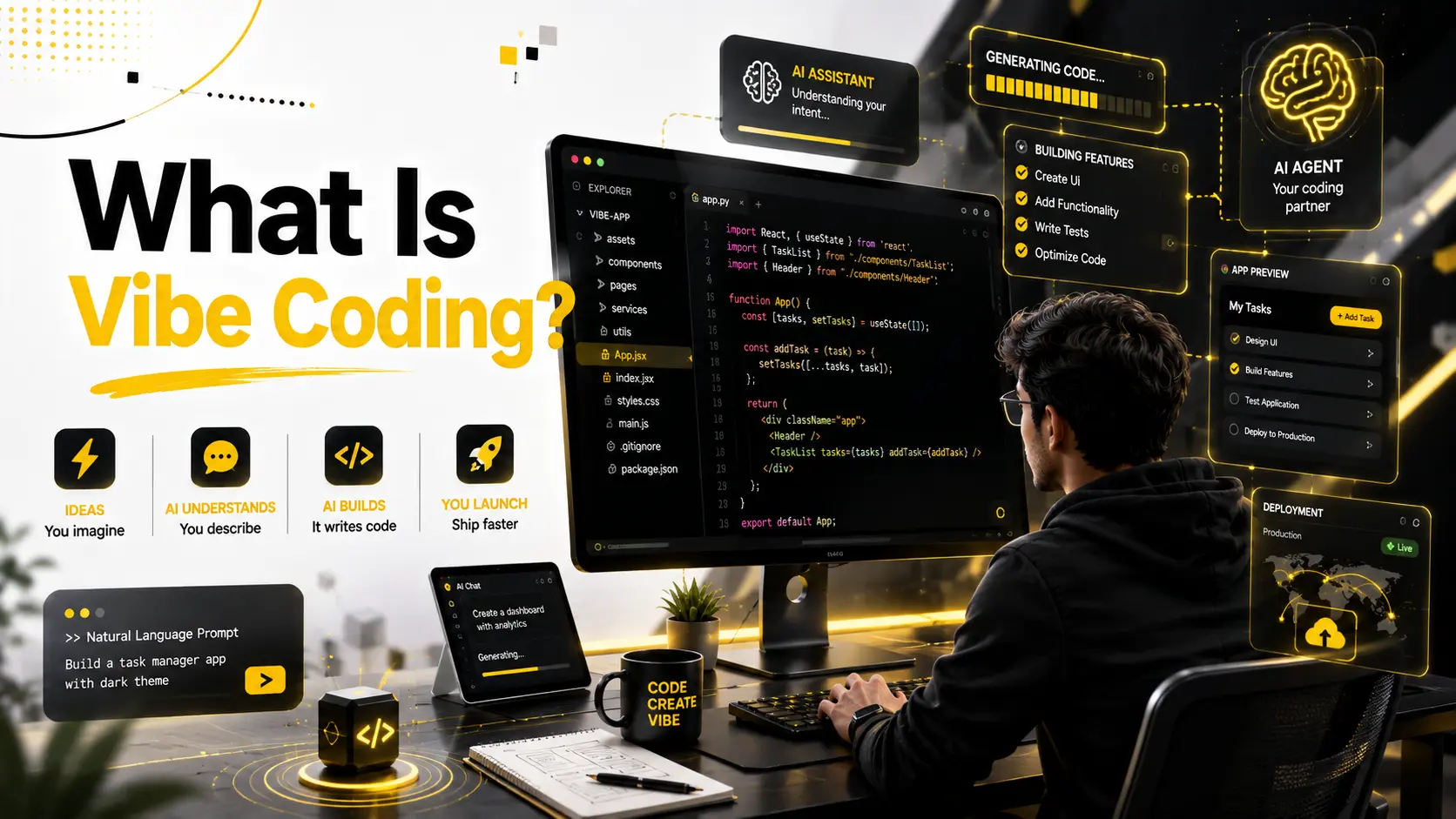
Vibe Coding is a modern software development approach where you explain your idea or requirement in plain English, and an AI coding assistant generates, modifies, and improves the code through an ongoing conversation. Instead of focusing on writing every line manually, developers guide the AI, review the generated code, test it, and refine the final application. :contentReference[oaicite:3]{index=3}
Unlike traditional programming, where syntax and manual implementation consume much of the development time, Vibe Coding shifts the developer's role toward planning, reviewing, debugging, and making architectural decisions. The AI becomes a collaborative programming partner rather than a replacement for the developer. :contentReference[oaicite:4]{index=4}
The quality of the final application depends not only on the AI model but also on how clearly the developer communicates requirements and validates the generated code.
Why Is Everyone Talking About Vibe Coding?
Several technological breakthroughs happened at the same time. Modern large language models became capable of understanding much larger codebases instead of predicting only the next few lines of code. AI-powered editors such as Cursor and GitHub Copilot integrated these capabilities directly into developers' workflows, while Claude Code expanded AI assistance into terminal-based, multi-file development. :contentReference[oaicite:5]{index=5}
As a result, development timelines that previously required months can now be reduced to days for many prototypes and minimum viable products (MVPs). Independent developers and startup founders are able to build production-quality applications much faster, giving AI-assisted programming enormous popularity across the software industry. :contentReference[oaicite:6]{index=6}
Why Is It Called "Vibe Coding"?
The term Vibe Coding was introduced by AI researcher Andrej Karpathy in early 2025. He used the phrase to describe a style of programming where developers spend less time manually writing every line of code and more time guiding AI systems, reviewing the results, and focusing on the overall direction of a project. :contentReference[oaicite:7]{index=7}
The name quickly gained popularity because it perfectly captured the changing role of developers. Instead of typing every instruction themselves, developers increasingly direct the "vibe" or intent of the application while AI handles much of the repetitive implementation work. :contentReference[oaicite:8]{index=8}
How Does Vibe Coding Work?
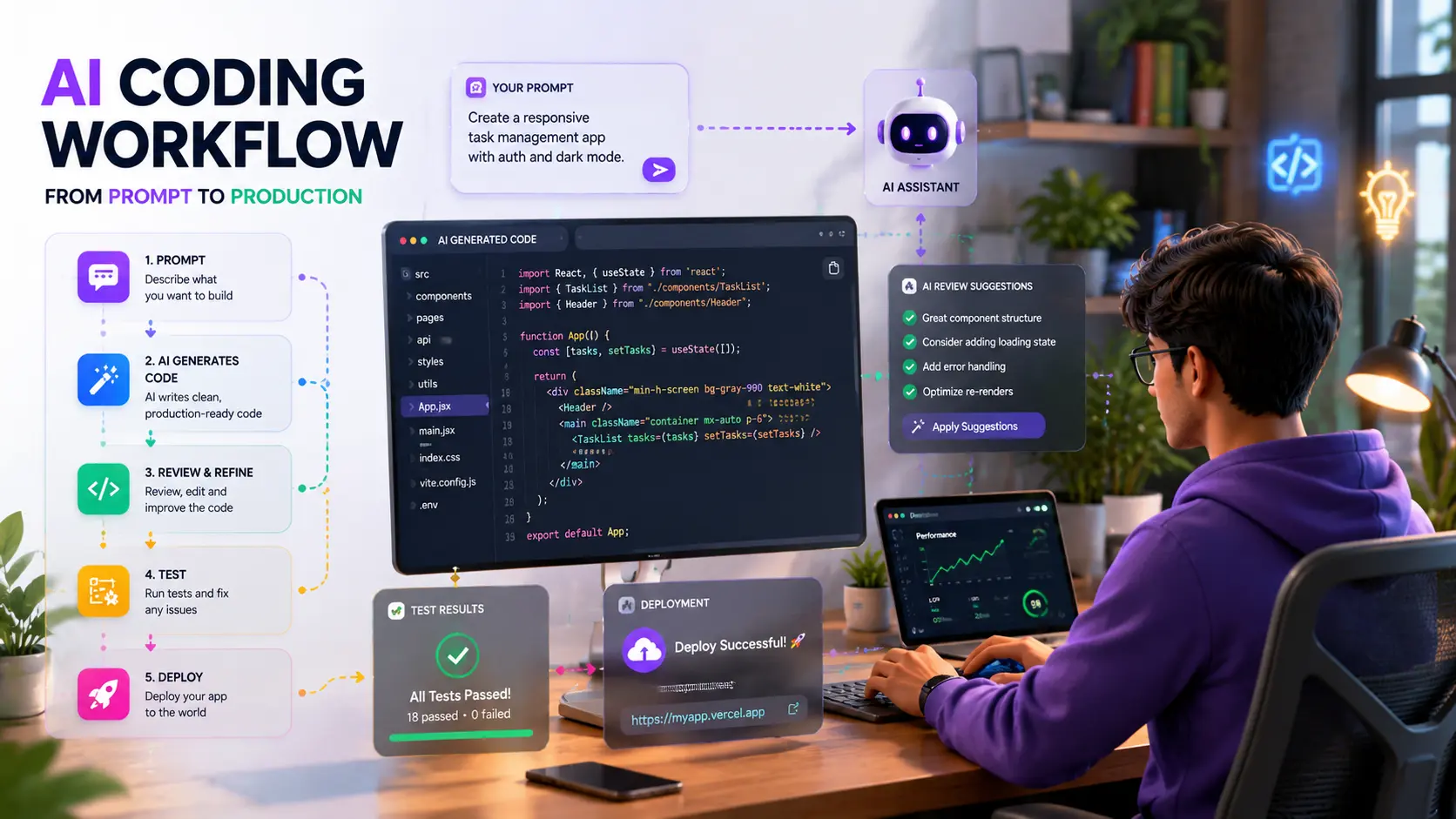
The Vibe Coding workflow is surprisingly straightforward. Developers begin with an idea, describe the desired functionality in natural language, allow the AI to generate an initial implementation, carefully review the output, test the application, and then deploy it once everything has been verified. Skipping the review stage is where many beginners encounter problems, making human oversight an essential part of the workflow. :contentReference[oaicite:9]{index=9}
Developer TipThink of AI as a fast junior developer. It can write code quickly, but it's still your responsibility to review, test, and validate every important change before shipping it to production.
Traditional Programming vs Vibe Coding
Traditional programming requires developers to manually design algorithms, write every line of code, debug syntax errors, and continuously maintain their applications. Vibe Coding changes this workflow by allowing developers to describe their intent in natural language while AI generates the initial implementation. Although AI accelerates development, developers remain responsible for reviewing, testing, and improving the generated code before deployment. :contentReference[oaicite:0]{index=0}
| Aspect | Traditional Programming | Vibe Coding |
|---|---|---|
| Primary Skill | Writing code manually | Clear prompting and reviewing AI output |
| Learning Curve | Steep but consistent | Easy to start, harder to master |
| Productivity | Depends on coding experience | Depends on prompt quality and AI collaboration |
| Debugging | Debug your own code | Debug AI-generated code |
| Best Use Case | Large production systems | Rapid prototypes and MVPs |
Best AI Tools for Vibe Coding in 2026
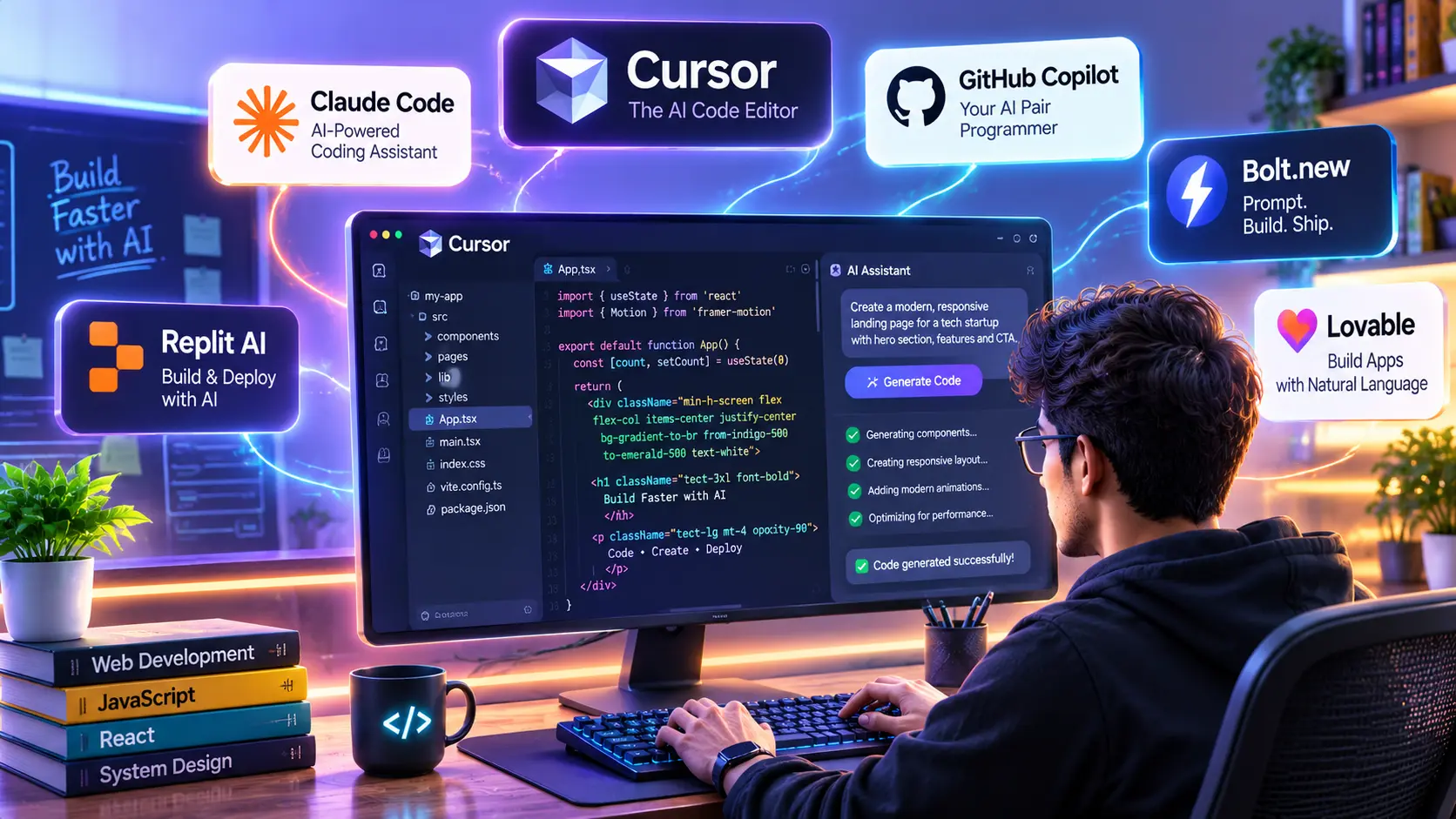
The rapid growth of Vibe Coding has been driven by powerful AI-assisted development tools. While each platform has its own strengths, they all share the same goal helping developers build software faster through natural language interactions and intelligent code generation. :contentReference[oaicite:1]{index=1}
Popular AI Coding Tools
- Cursor AI A powerful AI-first code editor designed for conversational coding, debugging, and multi-file editing.
- Claude Code Anthropic's terminal-based AI coding assistant capable of understanding and modifying large codebases.
- GitHub Copilot Microsoft's AI programming assistant that provides inline code suggestions and AI-powered development support.
- Replit AI A browser-based coding platform that combines AI assistance with instant cloud deployment.
- Bolt.new Allows users to generate complete web applications from a single natural language prompt.
- Lovable Designed primarily for founders and beginners, transforming plain-English ideas into functional software products.
- Windsurf An AI coding assistant that anticipates developer intentions and assists with complex programming workflows.
Real-World Example
One of the best demonstrations of Vibe Coding's potential is Lovable, a Swedish startup that allows users to describe an application idea using natural language and watch it become a working product. Within just a few months of launch, the platform achieved remarkable business growth, proving that AI-assisted software development can create real commercial value beyond simple demonstrations. :contentReference[oaicite:2]{index=2}
Did You Know?During Google's Q3 2024 earnings call, CEO Sundar Pichai revealed that more than 25% of Google's newly written code was AI-generated. By April 2026, that figure had reportedly increased to approximately 75%, highlighting how rapidly AI-assisted software development is becoming part of professional engineering workflows. :contentReference[oaicite:3]{index=3}
Benefits of Vibe Coding
Vibe Coding offers significant productivity advantages for developers, startups, and learners by reducing repetitive programming tasks and allowing developers to focus on solving problems rather than writing boilerplate code. :contentReference[oaicite:4]{index=4}
- Accelerates rapid prototyping and idea validation.
- Reduces the entry barrier for beginner developers.
- Allows developers to focus more on software architecture than repetitive coding.
- Provides valuable learning opportunities by observing AI-generated implementations.
Limitations of Vibe Coding
Despite its advantages, Vibe Coding is not a replacement for software engineering knowledge. AI-generated code can still contain security vulnerabilities, inefficient logic, or architectural issues that require human expertise to identify and resolve. :contentReference[oaicite:5]{index=5}
- Generated code may contain security flaws.
- Large enterprise codebases remain challenging for AI.
- Developers may become overly dependent on AI.
- Human review, testing, and compliance remain essential.
Common Mistakes Beginners Make
Many beginners treat AI-generated code as automatically correct, which often leads to bugs, security issues, and poor learning outcomes. Successful developers use AI as an assistant not as a replacement for understanding programming fundamentals. :contentReference[oaicite:6]{index=6}
- Accepting AI-generated code without reviewing it.
- Writing vague prompts instead of clear, detailed instructions.
- Using AI to memorize syntax instead of learning programming concepts.
- Deploying AI-generated prototypes directly into production without proper testing.
Should Beginners Learn Vibe Coding?
The short answer is yes but not as a replacement for programming fundamentals. Vibe Coding can dramatically accelerate learning and experimentation, but beginners still need to understand concepts such as variables, functions, loops, data structures, and debugging to recognize when AI-generated code is correct or flawed. :contentReference[oaicite:0]{index=0}
AI coding assistants work best when paired with a strong foundation in programming. Instead of treating AI as a shortcut, beginners should use it as a learning companion that explains code, generates examples, and demonstrates different approaches to solving problems. This combination helps developers improve both productivity and technical understanding. :contentReference[oaicite:1]{index=1}
Expert TipTreat AI-generated code like a pull request from an unfamiliar developer. Read every important change, question the implementation, test it thoroughly, and only merge it after you fully understand what the code is doing.
Expert InsightDevelopers are unlikely to be replaced simply because AI can write code. Instead, the biggest advantage will belong to developers who know how to collaborate effectively with AI while continuing to apply human judgment, software design principles, and critical thinking.
Future of Vibe Coding in 2026 and Beyond
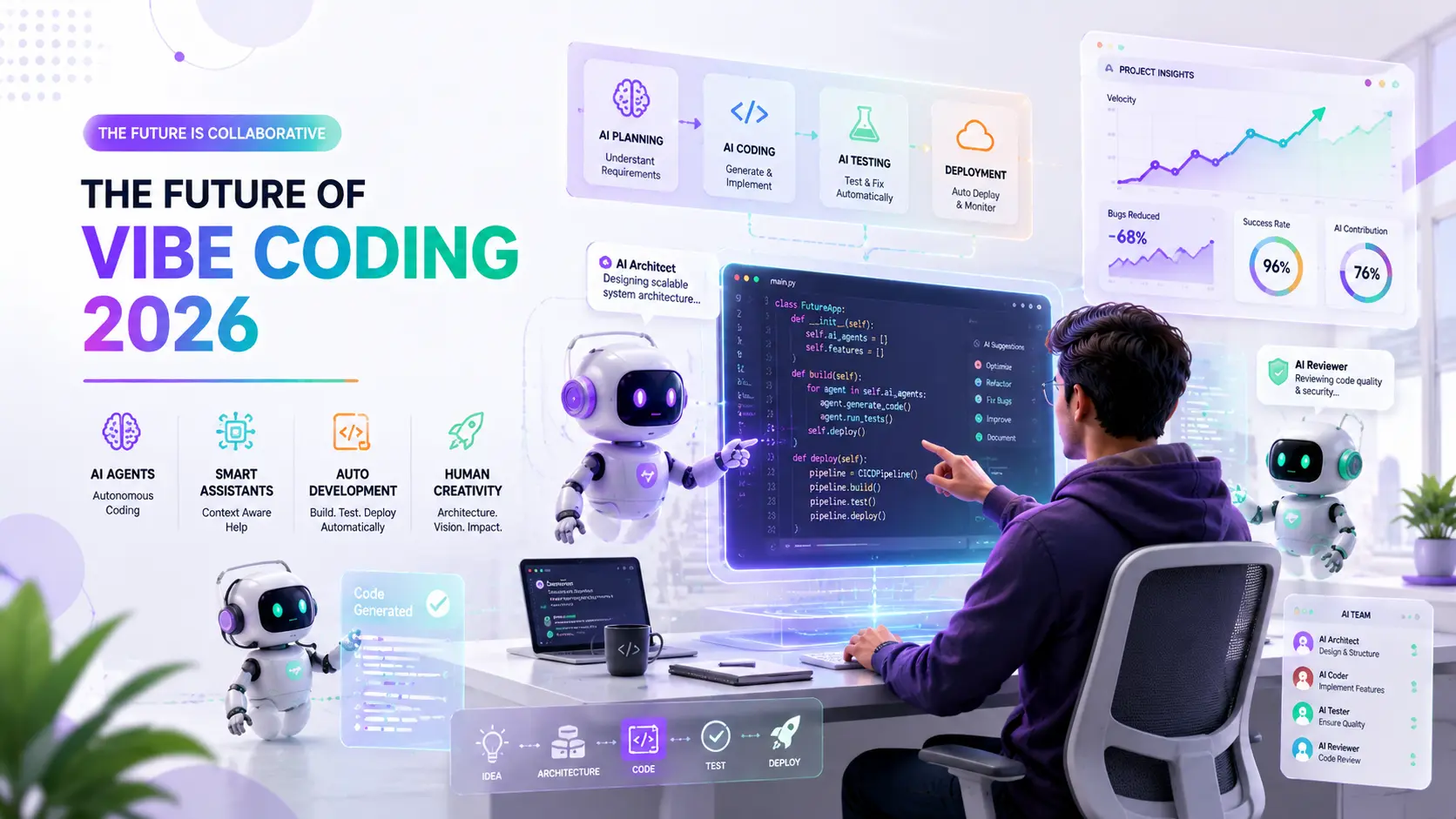
Vibe Coding continues to evolve beyond simple code generation. AI systems are becoming capable of planning development tasks, debugging applications, writing automated tests, reviewing pull requests, and coordinating multiple software engineering activities with far less human intervention. This evolution is gradually shifting developers from writing every line of code toward supervising intelligent software agents. :contentReference[oaicite:2]{index=2}
Future AI development platforms are expected to support autonomous debugging, AI-powered security reviews, intelligent code optimization, and multi-agent software development, where specialized AI agents collaborate on frontend, backend, testing, and deployment simultaneously. Human oversight, however, will remain essential for architecture, security, and business decision-making. :contentReference[oaicite:3]{index=3}
Conclusion
Vibe Coding is not about replacing developers it is about changing how software is built. By allowing developers to describe their ideas in natural language while AI generates the initial implementation, this new development style dramatically increases productivity without eliminating the need for programming knowledge. :contentReference[oaicite:4]{index=4}
The developers who will thrive in the coming years are those who combine strong programming fundamentals with AI-assisted development tools. Learning to review, test, refine, and improve AI-generated code will become one of the most valuable software engineering skills in the AI era. :contentReference[oaicite:5]{index=5}
Frequently Asked Questions
1. What is Vibe Coding in simple words?
Vibe Coding is a way of building software by describing what you want in plain English and letting an AI coding assistant generate and improve the code while you review and test the final result.
2. Who invented the term Vibe Coding?
The term was introduced by AI researcher Andrej Karpathy in February 2025 to describe conversational AI-assisted software development.
3. Can beginners use Vibe Coding without learning programming?
Beginners can build simple prototypes using AI coding tools, but learning programming fundamentals is still important for understanding, debugging, and maintaining AI-generated code.
4. Is Vibe Coding safe for production applications?
Not by itself. AI-generated code should always be reviewed, tested, and validated before being deployed to production because security vulnerabilities and logical errors can still occur.
5. Which AI coding tools are best for beginners?
Replit AI, Bolt.new, and Lovable are excellent beginner-friendly options, while Cursor AI and Claude Code are better suited for developers who already have programming experience.
6. Will Vibe Coding replace software developers?
No. AI changes how developers work, but human skills such as architecture, problem-solving, debugging, software design, and decision-making remain essential.
7. Is Vibe Coding a good way to learn programming?
Yes, provided it is used alongside traditional learning. AI can explain concepts and generate examples, but understanding programming fundamentals remains critical for long-term success.
Continue Learning with InfoShalaa
Interested in learning more about Artificial Intelligence, Programming, Web Development, Data Science, Cybersecurity, and the latest developer tools? Explore more beginner-friendly tutorials, practical guides, career resources, and technology insights on InfoShalaa.
Whether you're just starting your programming journey or exploring the future of AI-assisted software development, our goal is to help you build practical, industry-ready skills through clear, easy-to-follow educational content.
Keep LearningMaster programming fundamentals, experiment with modern AI coding tools, and continue building real-world projects. The future belongs to developers who combine technical knowledge with the power of Artificial Intelligence.