

Introduction
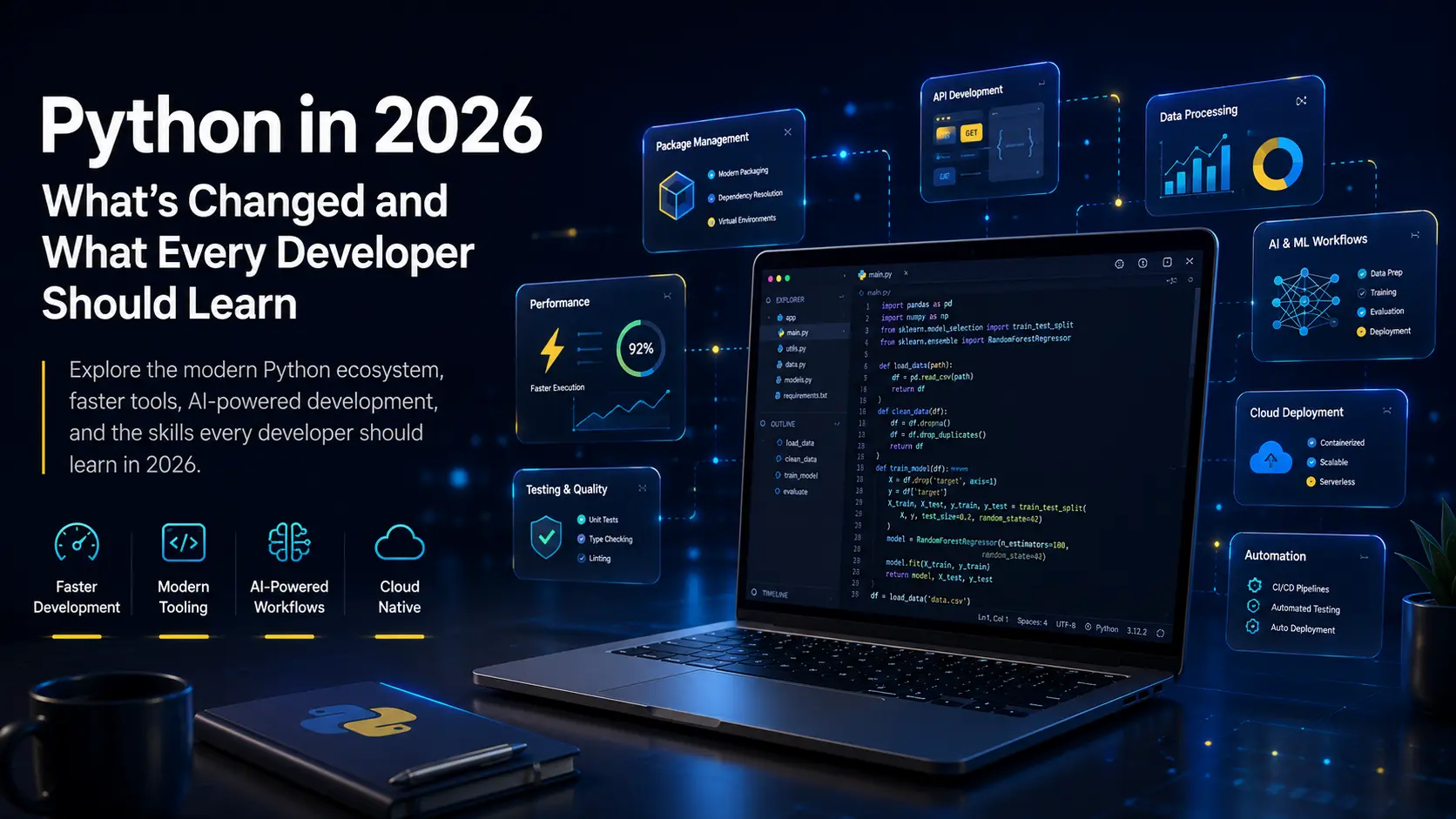
Python has been one of the world's most popular programming languages for years, but the way developers use it has changed significantly. If you learned Python a few years ago, you'll quickly notice that modern projects rely on a very different set of tools and workflows.
The language itself still feels familiar. You can write loops, functions, classes, and scripts just as before. What has evolved is the ecosystem surrounding Python. Faster package managers, modern code quality tools, high-performance data libraries, and lightweight backend frameworks have made Python development simpler, faster, and more efficient.
Whether you're a student, a working developer, or someone returning to Python after a break, understanding these ecosystem changes can save time and help you build projects using the tools that many modern development teams prefer today.
In this article, you'll learn:
- What's changed in the Python ecosystem in 2026
- The modern tools developers are adopting and why
- Which tools are worth learning first
- A practical roadmap to modernize your Python workflow
Let's explore the biggest changes shaping modern Python development in 2026.
Why the Python Ecosystem Needed a Refresh
For years, Python developers relied on a collection of separate tools: pip for installing packages, virtualenv for isolated environments, pyenv for managing Python versions, and different utilities for formatting and linting code.
Although this workflow worked well, it often meant extra setup, slower dependency installation, and multiple tools to configure before writing any actual code.
As Python became the foundation of artificial intelligence, data science, automation, cloud computing, and backend development, developers started looking for a faster and more streamlined workflow.
Instead of changing Python itself, the community focused on improving the ecosystem around it. That's why modern tools like uv, Ruff, Polars, and FastAPI have become increasingly popular. They solve everyday development problems while making projects easier to build, maintain, and scale.
💡 Key InsightThe biggest innovation in Python isn't a new programming syntax it's the modern ecosystem that makes development faster, cleaner, and more productive.
Package Management Got a Major Upgrade
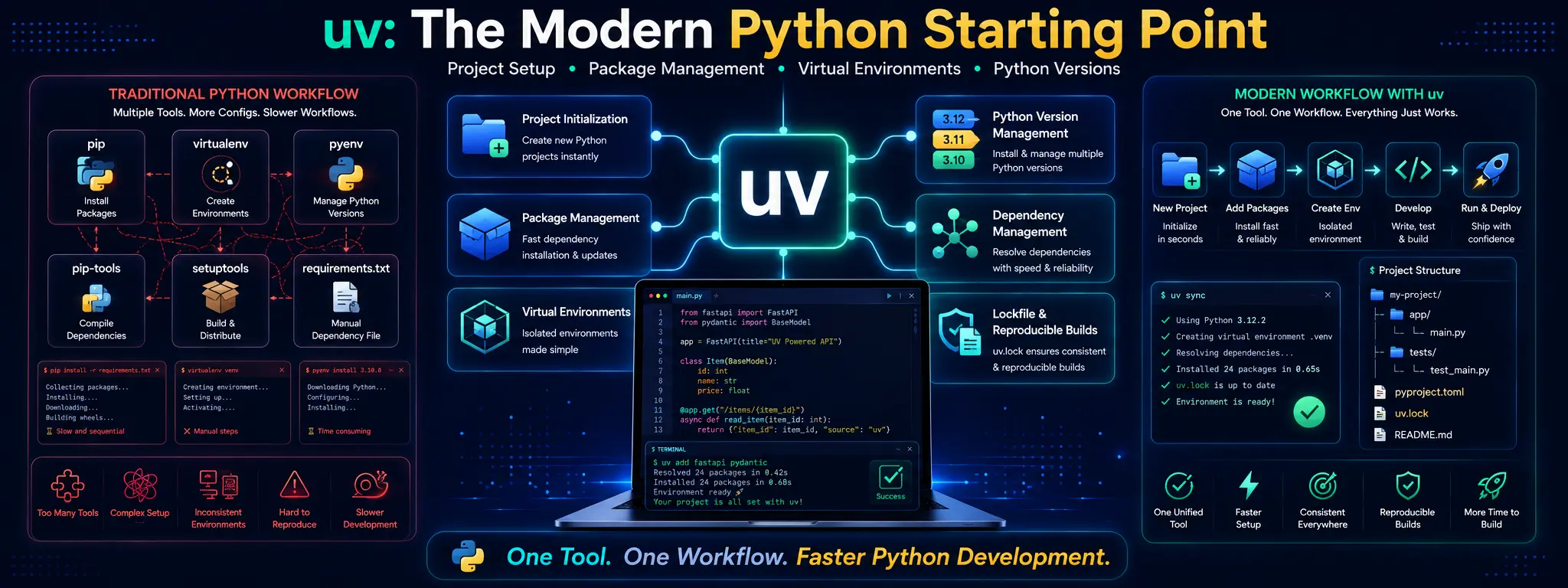
For many years, creating a Python project involved installing packages with pip, creating a virtual environment using virtualenv (or venv), and managing multiple Python versions with pyenv.
While this approach was reliable, developers had to work with several different tools before they could even begin building their application.
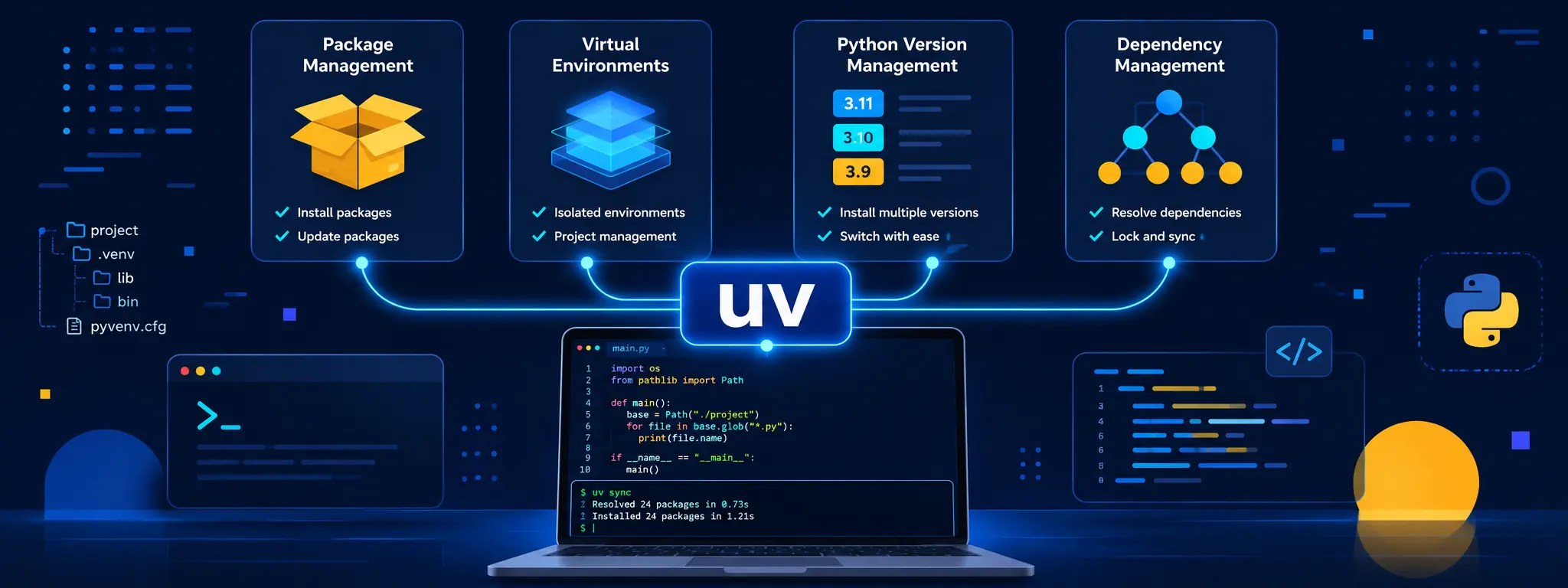
Today, many developers are switching to uv, a modern package and project manager built by Astral in Rust.
Instead of juggling multiple utilities, uv combines package installation, virtual environment management, and Python version management into a single, high-performance tool.
This dramatically reduces project setup time while providing a cleaner and more consistent development experience.
Why Developers Like uv
- ⚡ Faster package installation
- 📦 Automatic virtual environment management
- 🐍 Built-in Python version management
- 🔒 Reproducible environments using lockfiles
- ✅ Familiar commands with a minimal learning curve
Traditional Workflow vs Modern Workflow
| Traditional Workflow | Modern Workflow |
|---|---|
| pip + venv + pyenv | uv |
| Multiple setup steps | One integrated tool |
| Slower dependency installation | Much faster installation |
| Several tools to maintain | Single streamlined workflow |
💡 Pro TipIf you're starting a new Python project in 2026, consider using uv from day one instead of combining multiple tools. Existing projects can continue using pip if they're already stable and working well.
📝 Notepip isn't obsolete. It remains part of Python and will continue to work reliably. The shift toward uv is mainly about improving the developer experience rather than replacing Python itself.
Ruff Simplified Code Quality
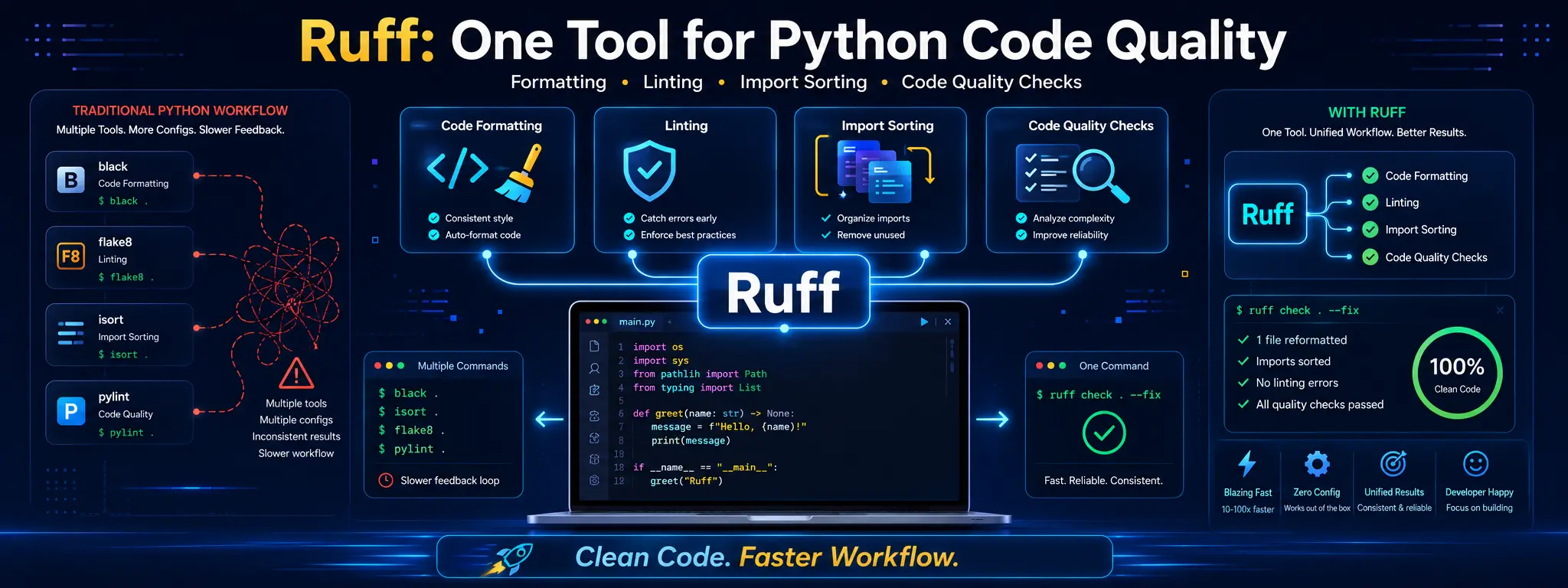
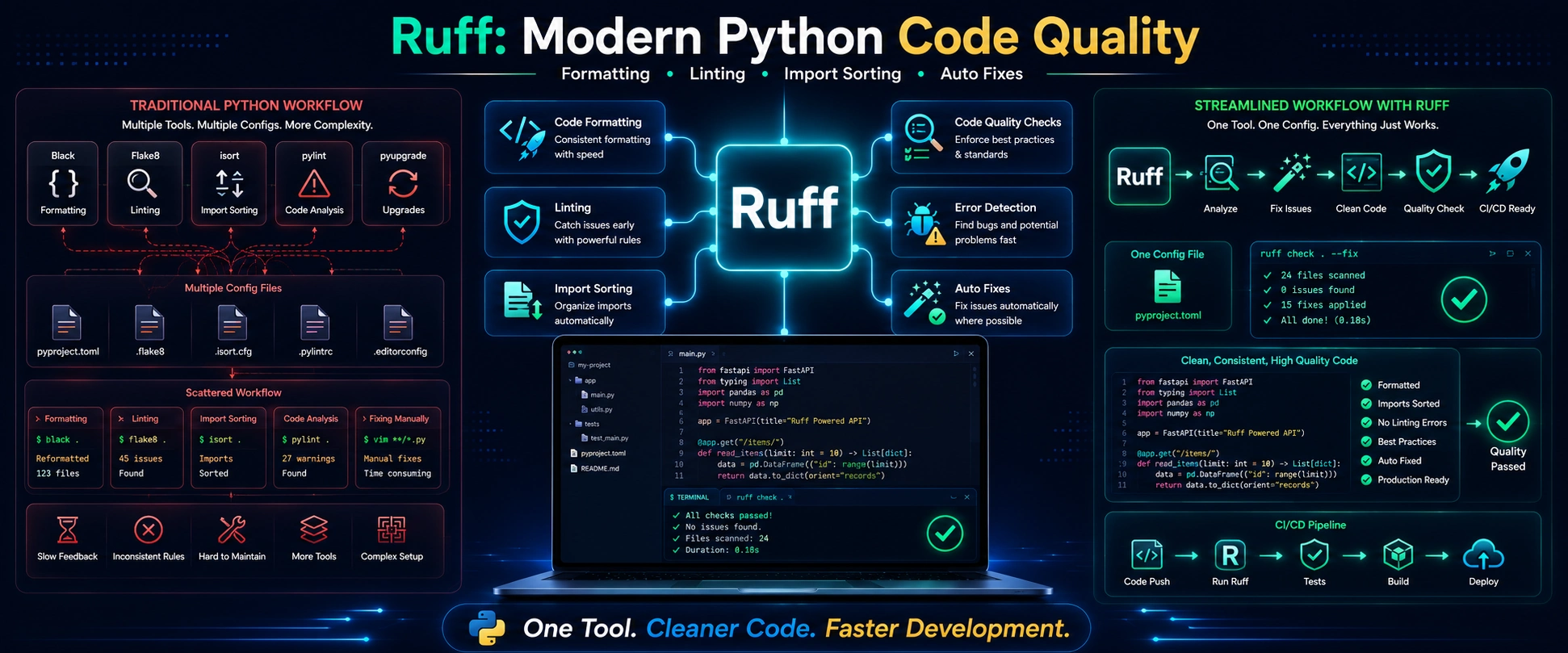
Maintaining clean Python code traditionally required multiple tools. Developers commonly used Black for code formatting, Flake8 for linting, and isort for organizing imports.
Although each tool solved a specific problem, configuring and maintaining several utilities increased project complexity and added extra steps to the development workflow.
Today, many developers are replacing this collection of tools with Ruff, a high-performance code quality tool written in Rust. Ruff combines linting, formatting, and import organization into a single application while remaining compatible with many existing Python coding standards.
This makes it much easier for individuals and development teams to maintain clean, consistent code without managing multiple configurations.
Traditional Tools vs Modern Alternative
| Traditional Tool | Modern Alternative |
|---|---|
| Black | Ruff |
| Flake8 | Ruff |
| isort | Ruff |
✅ Quick RecommendationIf you're learning Python today, Ruff is one of the easiest modern tools to adopt because it improves your workflow without changing how you write Python code.
Polars Is Becoming a Strong Alternative for Data Processing
For years, Pandas has been the standard Python library for working with structured data. It remains one of the most widely used libraries in data science, analytics, and machine learning.
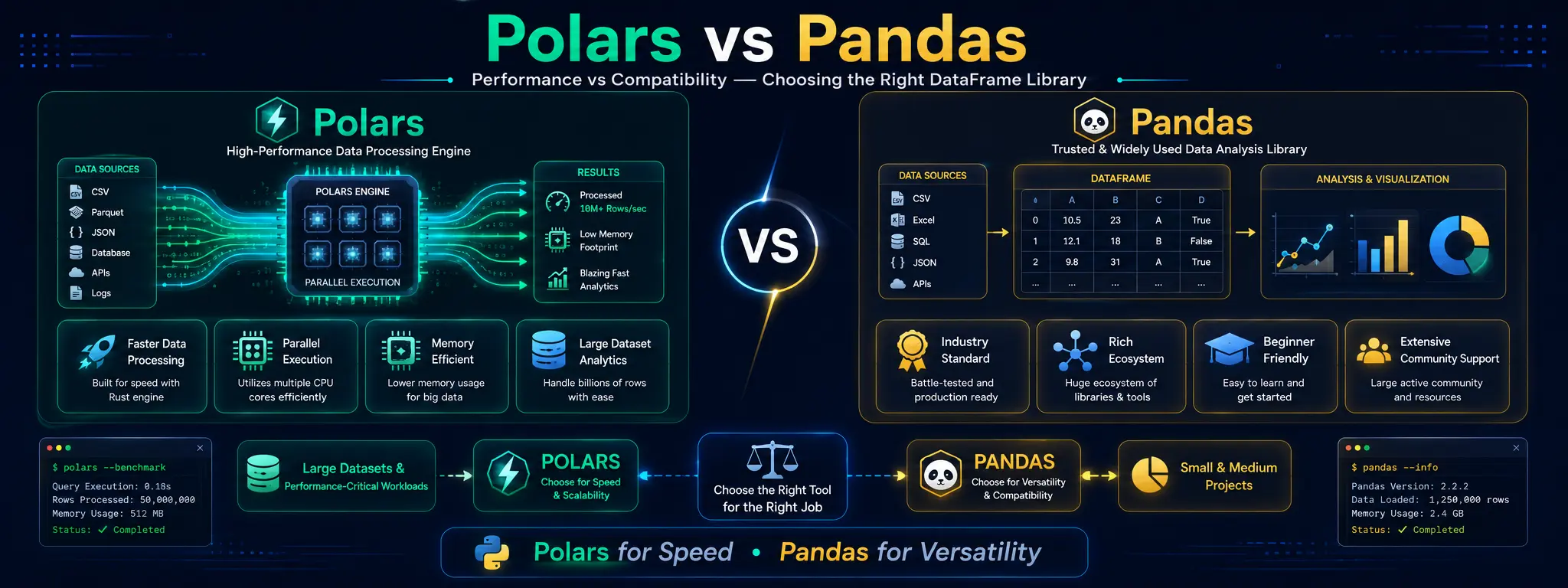
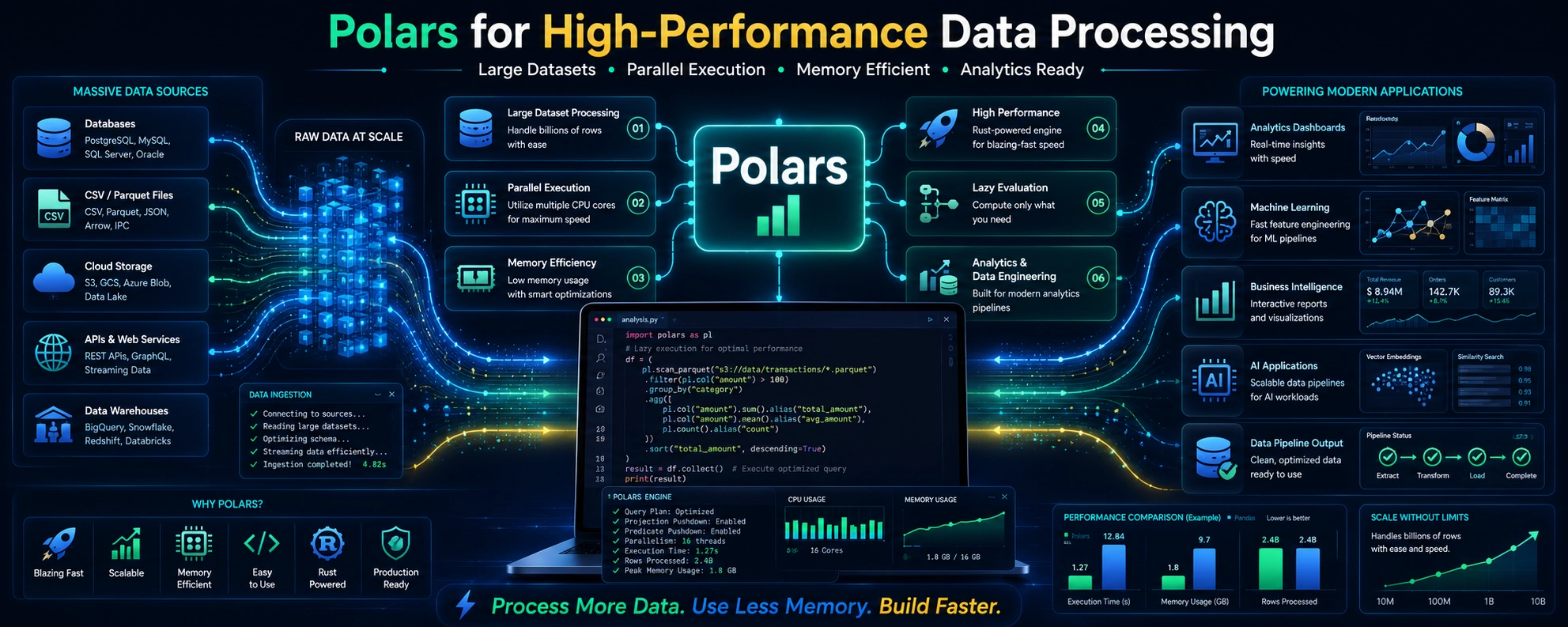
However, as datasets continue to grow larger, developers have started adopting Polars, a modern DataFrame library designed for better performance and lower memory usage.
Unlike Pandas, Polars automatically utilizes multiple CPU cores, allowing many data operations to run significantly faster without requiring additional configuration.
For data-intensive applications, this performance improvement can noticeably reduce processing time.
Pandas vs Polars
| Pandas | Polars |
|---|---|
| Mature ecosystem | Modern architecture |
| Single-thread focused | Multi-threaded by default |
| Great for most projects | Better for very large datasets |
⚠️ ImportantYou don't need to replace Pandas immediately. If you're a beginner, learning Pandas first is still the best choice because of its extensive documentation and large community. Polars becomes more valuable as your datasets and performance requirements grow.
FastAPI Has Become the Preferred Choice for Modern APIs
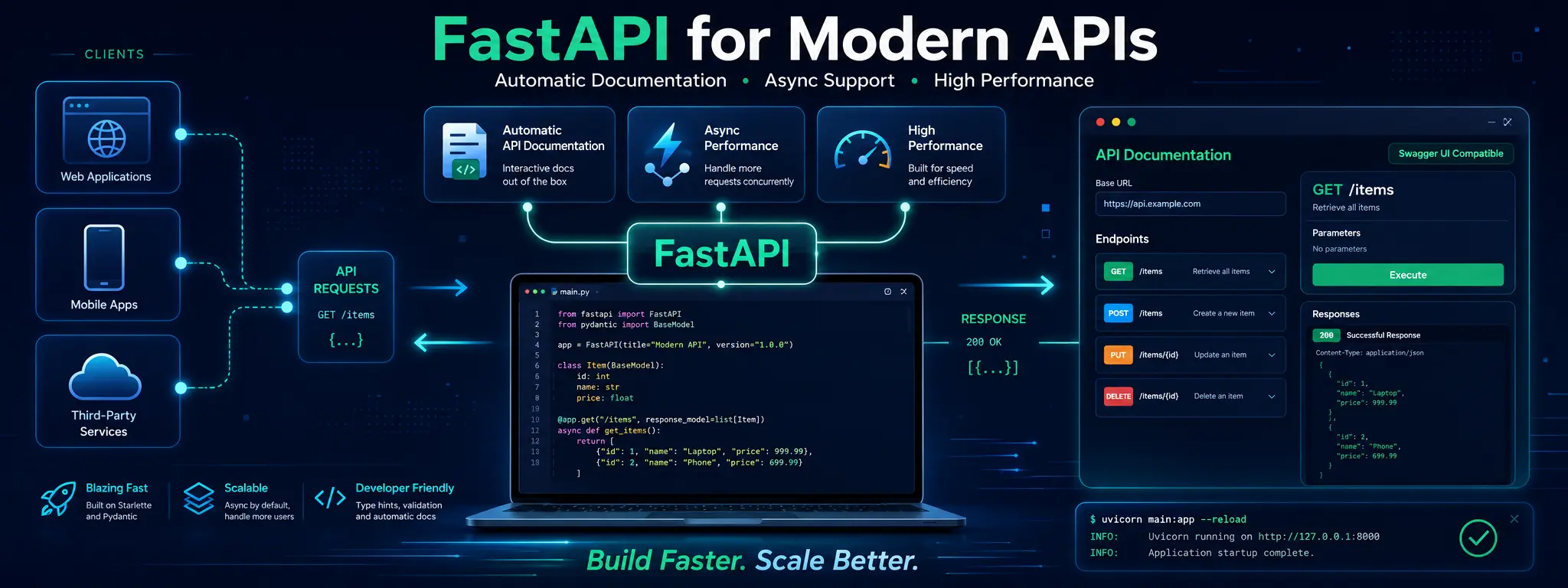
Building APIs with Python once meant choosing between Flask and Django. While both frameworks are still actively maintained and widely used, FastAPI has become one of the most popular options for modern backend development.
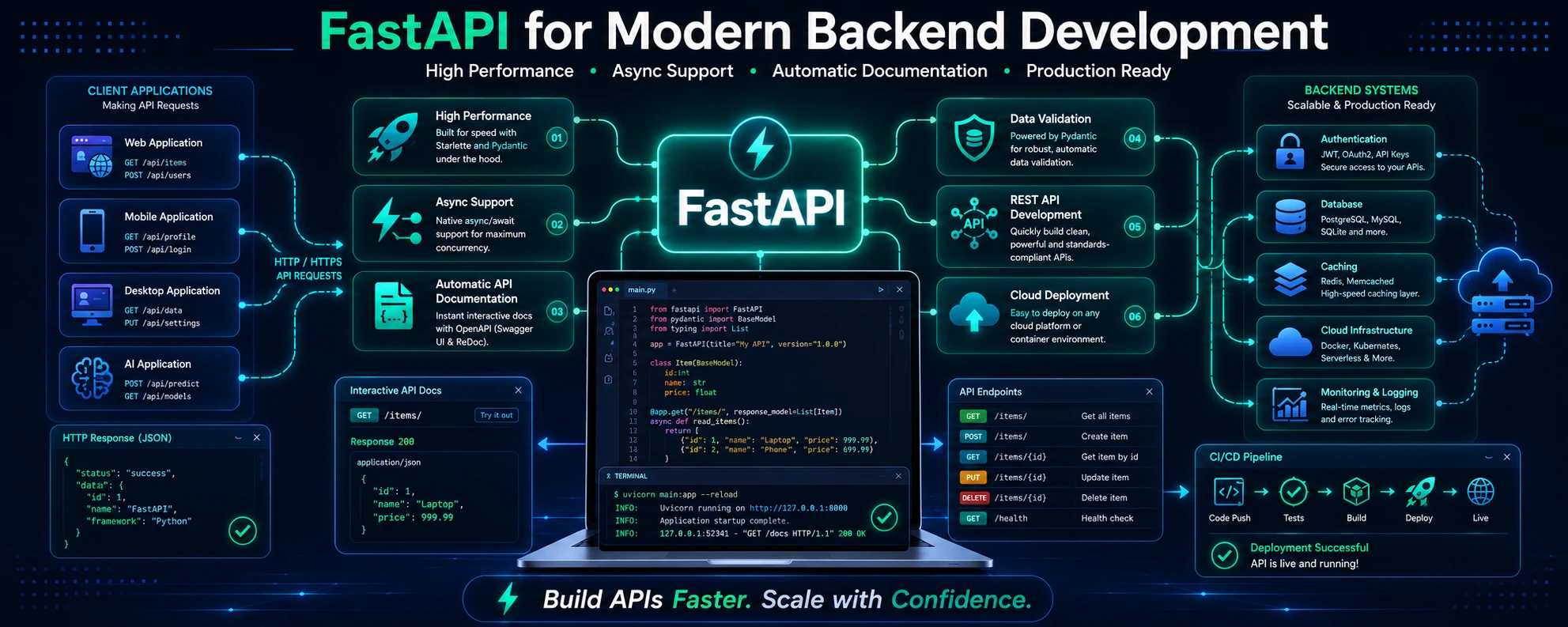
FastAPI provides built-in support for asynchronous programming, automatic API documentation, and powerful type validation. These features reduce boilerplate code while making applications easier to build and maintain.
Its speed and simplicity have made it especially popular for AI applications, cloud services, automation platforms, and microservices.
Popular Python Frameworks
| Framework | Best For |
|---|---|
| Flask | Small applications and learning |
| Django | Full-stack web applications |
| FastAPI | Modern APIs, AI services, and microservices |
🚀 Best ForIf your goal is AI development, backend engineering, cloud computing, or automation, learning FastAPI is one of the most valuable investments you can make.
Free-Threaded Python Is a Big Step Forward
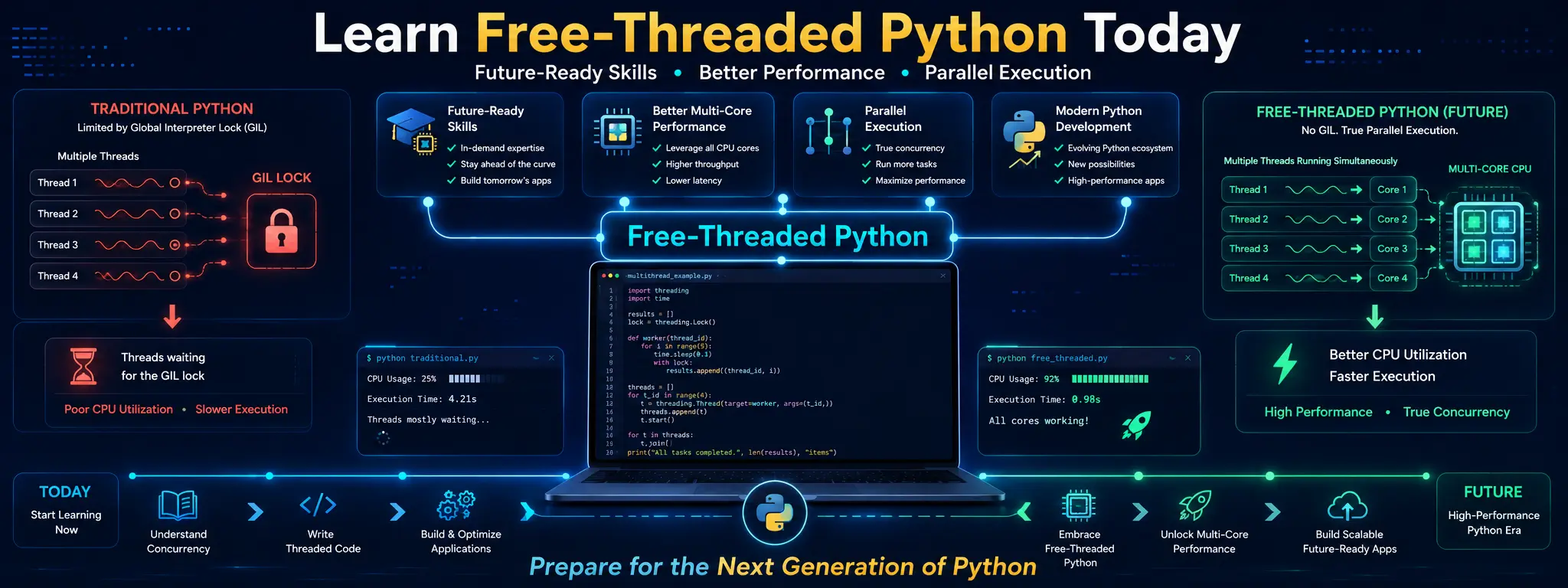
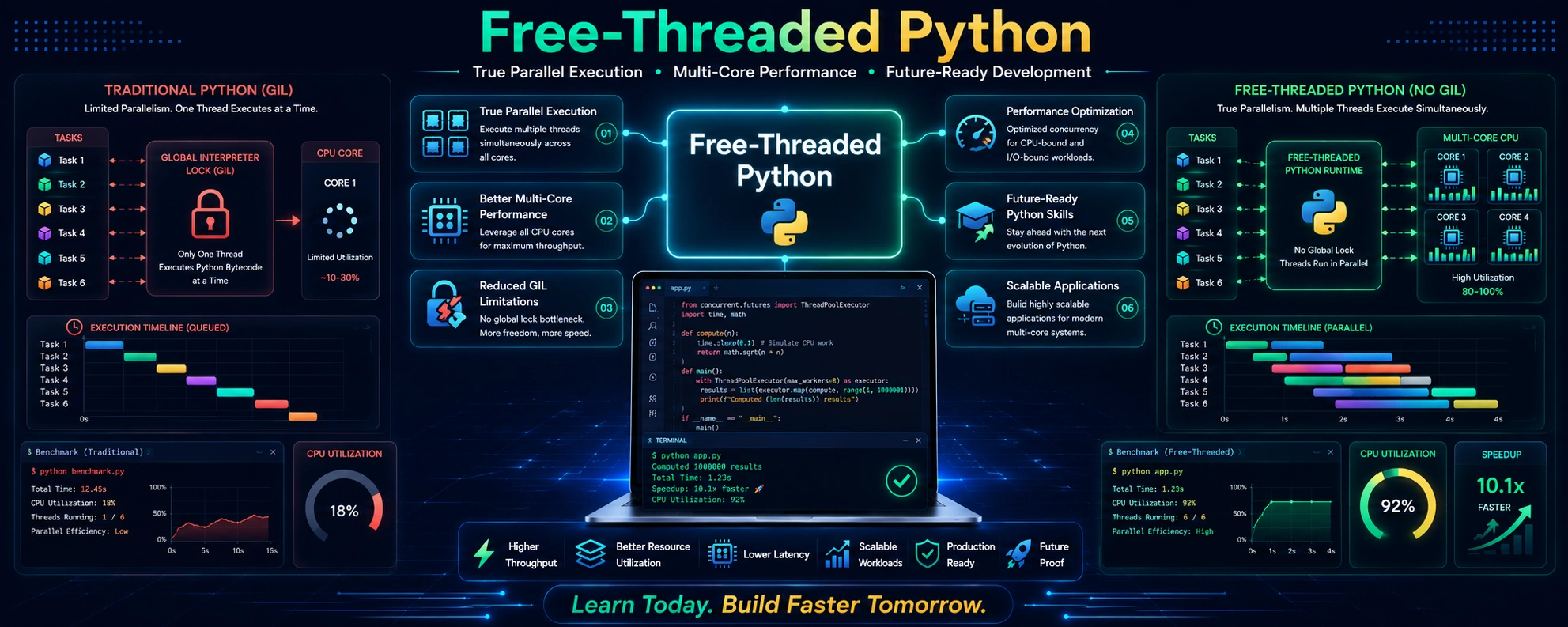
One of Python's long-standing limitations has been the Global Interpreter Lock (GIL), which restricted true parallel execution of Python threads for CPU-bound tasks.
With Python 3.14, developers can now experiment with free-threaded builds that significantly reduce this limitation.
Although the feature is still optional and many third-party libraries are continuing to improve compatibility, it represents one of the biggest performance improvements in Python's recent history.
For developers working on scientific computing, machine learning, simulations, or large-scale data processing, free-threaded Python opens exciting possibilities for future performance gains.
📝 NoteMost developers don't need to switch to free-threaded Python immediately. It's more important to understand how it works today and adopt it later when your project's dependencies fully support it.
📌 Key Takeaway
The biggest change in Python isn't its syntax it's the ecosystem surrounding the language.
Instead of learning dozens of separate utilities, modern Python development focuses on a smaller, more integrated toolset that improves productivity and simplifies project management.
- uv for project and package management
- Ruff for code quality and formatting
- Polars for high-performance data processing
- FastAPI for building modern APIs
- Free-threaded Python for future performance improvements
These tools don't replace your Python knowledge they simply make your workflow faster, cleaner, and easier to maintain.
A Quick Snapshot: Old Stack vs. Modern Stack
By now, you've seen how Python's ecosystem has evolved. Instead of relying on multiple tools for different tasks, modern Python development emphasizes a simpler, faster, and more integrated workflow.
| Task | Older Approach | Modern Approach (2026) |
|---|---|---|
| Package Management | pip + virtualenv + pyenv | uv |
| Code Formatting & Linting | Black + Flake8 + isort | Ruff |
| Data Processing | Pandas | Pandas or Polars |
| API Development | Flask / Django REST Framework | FastAPI |
| Multithreading | Limited by the GIL | Free-threaded Python (Optional) |
💡 Pro TipYou don't have to modernize your entire workflow overnight. Start by adopting one new tool, become comfortable with it, and gradually update the rest of your development stack.
What Every Python Developer Should Learn
With so many modern Python tools available today, it's easy to feel overwhelmed. The good news is that you don't need to learn everything at once.
The roadmap below follows a practical learning order that works well for students, beginners, working developers, and anyone returning to Python after a break.
Instead of replacing your entire workflow overnight, adopt one tool at a time and use it in real projects. This gradual approach makes learning much easier while improving your productivity along the way.
1. Start with uv
If you're beginning a new Python project, replace the traditional pip + venv workflow with uv. It is faster, easier to manage, and reduces the number of tools you need throughout the development process.
Since uv combines package management, virtual environments, and Python version management into one application, project setup becomes much simpler.
Recommended For
- ✅ Beginners
- ✅ Students
- ✅ Freelancers
- ✅ Backend Developers
2. Add Ruff
Once your project is running, configure Ruff for linting and formatting. It keeps your code clean while replacing several traditional tools such as Black, Flake8, and isort.
Using one lightweight tool instead of multiple utilities reduces configuration and makes development much more enjoyable.
Recommended For
- ✅ Individual Developers
- ✅ Development Teams
- ✅ Open Source Contributors
📝 NoteYou don't have to remove Black or Flake8 from existing projects immediately. Ruff is easiest to adopt in new projects or actively maintained codebases.
3. Learn FastAPI
If your goal is backend development, cloud computing, automation, or artificial intelligence, FastAPI should be your next learning priority.
Its excellent performance, automatic documentation, and built-in validation make it one of the most popular Python frameworks for building modern APIs.
Recommended For
- ✅ Backend Developers
- ✅ AI Engineers
- ✅ Automation Projects
- ✅ Cloud Applications
4. Explore Polars
If your projects involve processing large datasets, learning Polars can significantly improve performance and reduce memory usage.
However, Pandas remains an excellent choice for learning data analysis and handling most everyday projects.
⚠️ ImportantDon't switch to Polars simply because it's faster. Choose it only when your project genuinely benefits from improved speed and lower memory consumption.
5. Understand Free-Threaded Python
Free-threaded Python is one of the biggest improvements introduced in recent Python releases. Although it remains optional today, understanding how it works will prepare you for the future of Python performance.
As more third-party libraries add compatibility, free-threaded Python is expected to become increasingly valuable for CPU-intensive applications.
💡 Pro TipUnderstand the concept today, but wait until your libraries officially support free-threaded builds before using them in production.
A Modern Python Workflow
A modern Python project in 2026 typically follows a much simpler workflow than traditional Python development. Instead of relying on numerous disconnected tools, developers can move smoothly from project creation to deployment using an integrated toolchain.
| Development Stage | Recommended Tool |
|---|---|
| Create Project | uv |
| Install Dependencies | uv |
| Code Quality | Ruff |
| Build APIs | FastAPI |
| Testing | Pytest (or preferred testing framework) |
| Deployment | Cloud / Docker / Hosting Platform |
If your application handles large amounts of structured data, you can integrate Polars whenever performance becomes a priority.
📌 Key Takeaways
- Learn uv to simplify package and project management.
- Use Ruff to maintain clean, consistent Python code.
- Build modern APIs using FastAPI.
- Explore Polars for large-scale data processing.
- Keep an eye on free-threaded Python as the ecosystem continues to evolve.
🚀 Quick RecommendationThe fastest way to learn the modern Python ecosystem isn't by reading documentation it's by building real projects. Every new project is an opportunity to adopt one new tool and gradually modernize your workflow.
Frequently Asked Questions
Do I Need to Switch to uv Immediately?
No. If your current project is stable and working well with pip, there's no need to migrate right away. However, for new projects, uv is definitely worth trying because it combines package management, virtual environments, and Python version management into one fast, modern tool.
💡 Pro TipTry using uv for your next personal or side project first. It's the easiest way to learn without affecting existing production code.
Is Polars Replacing Pandas?
Not completely. Pandas remains the most popular Python library for data analysis and is still the best place for beginners to start.
Polars is simply a faster alternative designed for large datasets and performance-intensive workloads. Both libraries have their place, depending on your project requirements.
📝 NoteLearning Pandas first and exploring Polars later is the most practical approach for most developers.
Should I Learn FastAPI Instead of Flask?
It depends on your goals.
If you're interested in modern backend development, AI applications, cloud services, or scalable APIs, FastAPI is an excellent choice. Flask is still a great framework for learning web development fundamentals and building smaller applications.
🚀 Quick RecommendationIf you're starting from scratch in 2026, learning FastAPI will give you skills that are highly relevant to today's Python ecosystem.
Is Free-Threaded Python Ready for Production?
Free-threaded Python is officially available as an optional build, but many third-party libraries are still improving compatibility.
For now, it's best to understand how it works and adopt it only after confirming that your project's dependencies fully support it.
⚠️ ImportantAlways test thoroughly before using free-threaded Python in production environments.
Final Thoughts
Python continues to evolve not because its syntax changes every year, but because the ecosystem surrounding the language keeps improving.
Modern tools like uv, Ruff, Polars, and FastAPI help developers build projects faster, write cleaner code, and manage applications more efficiently than ever before.
The best part is that you don't need to learn everything at once. Start with one tool, use it in real projects, and gradually modernize your workflow as your experience grows.
Whether you're a student, a professional developer, or someone returning to Python after a break, understanding the modern Python ecosystem will help you stay productive and prepare for the future of software development.
📌 Key TakeawayLearning Python syntax is only the beginning. Mastering the modern Python ecosystem is what makes you a more efficient, productive, and future-ready developer.
What's Your Next Step?
If you're starting a new Python project today, this simple roadmap will help you adopt modern tools without feeling overwhelmed.
- ✅ Use uv for project and package management.
- ✅ Add Ruff for formatting and linting.
- ✅ Build modern APIs using FastAPI.
- ✅ Learn Polars when working with large datasets.
- ✅ Keep an eye on free-threaded Python as the ecosystem continues to mature.
Small improvements made consistently will have a much bigger impact than trying to learn every new tool all at once. Focus on building real projects, experiment with modern workflows, and continue improving one step at a time.
Continue Learning with InfoShalaa
The Python ecosystem will continue evolving, and staying updated is one of the best investments you can make as a developer.
At InfoShalaa, we regularly publish beginner-friendly and in-depth guides on Python, Artificial Intelligence, Data Science, Web Development, Programming, Cybersecurity, and emerging technologies to help you stay ahead of industry trends.
🚀 Keep Learning, Keep BuildingExplore more programming tutorials, AI guides, and software development resources on InfoShalaa and take your coding journey to the next level.
Happy Coding! 🚀