

Introduction
Imagine receiving a video call from someone who looks exactly like your CEO. The face matches, the voice sounds authentic, and the request seems completely legitimate. You're asked to approve an urgent financial transfer before an important business deal closes.
Everything appears normal—until you discover that the person on the screen never existed. The entire conversation was generated using artificial intelligence.
This is no longer science fiction. In 2026, AI-powered cyber attacks are transforming the cybersecurity landscape. Rather than inventing entirely new forms of cybercrime, attackers are using Artificial Intelligence to improve familiar techniques such as phishing, malware, deepfake scams, and social engineering. These attacks are becoming faster, more convincing, highly personalized, and significantly harder to detect.
Whether you're an individual, a business owner, a student, or an IT professional, understanding how hackers use AI has become an essential part of staying safe online.
In this guide, you'll learn how AI-powered cyber attacks work, the latest techniques cybercriminals are using, real-world examples, and practical cybersecurity best practices to protect yourself and your organization.
Quick Facts
- Artificial Intelligence is making phishing emails, fake websites, and online scams more convincing than traditional cyber attacks.
- Security researchers report a rapid increase in AI-assisted attack techniques, allowing cybercriminals to automate reconnaissance, malware development, and phishing campaigns at scale.
- Modern AI tools enable attackers to create highly personalized messages by analyzing publicly available information within minutes.
- Organizations now consider AI-assisted cybercrime one of the fastest-growing cybersecurity challenges.
Did You Know?Recent cybersecurity research shows that phishing-related data breaches remain among the most expensive and time-consuming incidents for organizations to recover from. As AI-generated emails and messages become more natural and personalized, identifying fraudulent communications is becoming increasingly difficult for both individuals and businesses.
What Are AI-Powered Cyber Attacks?
AI-powered cyber attacks are cyber attacks that use Artificial Intelligence to improve the speed, accuracy, personalization, or automation of malicious activities.
Instead of replacing traditional attack methods, AI enhances them. A phishing email that once contained poor grammar and obvious mistakes can now be generated in seconds with natural language, personalized details, and a convincing writing style that closely resembles legitimate business communication.
Similarly, AI can generate realistic voice recordings, create convincing deepfake videos, automate vulnerability research, and even assist in developing malware. These capabilities reduce the amount of manual work required by attackers while increasing the effectiveness of their campaigns.
The biggest concern isn't that Artificial Intelligence has created entirely new cyber threats. The real danger is that existing attacks have become more scalable, more believable, and significantly more difficult to identify before damage occurs.
Key TakeawayArtificial Intelligence isn't replacing traditional cyber attacks—it is making phishing, impersonation, malware, and social engineering significantly faster, smarter, and more convincing.
How Hackers Are Using AI in 2026
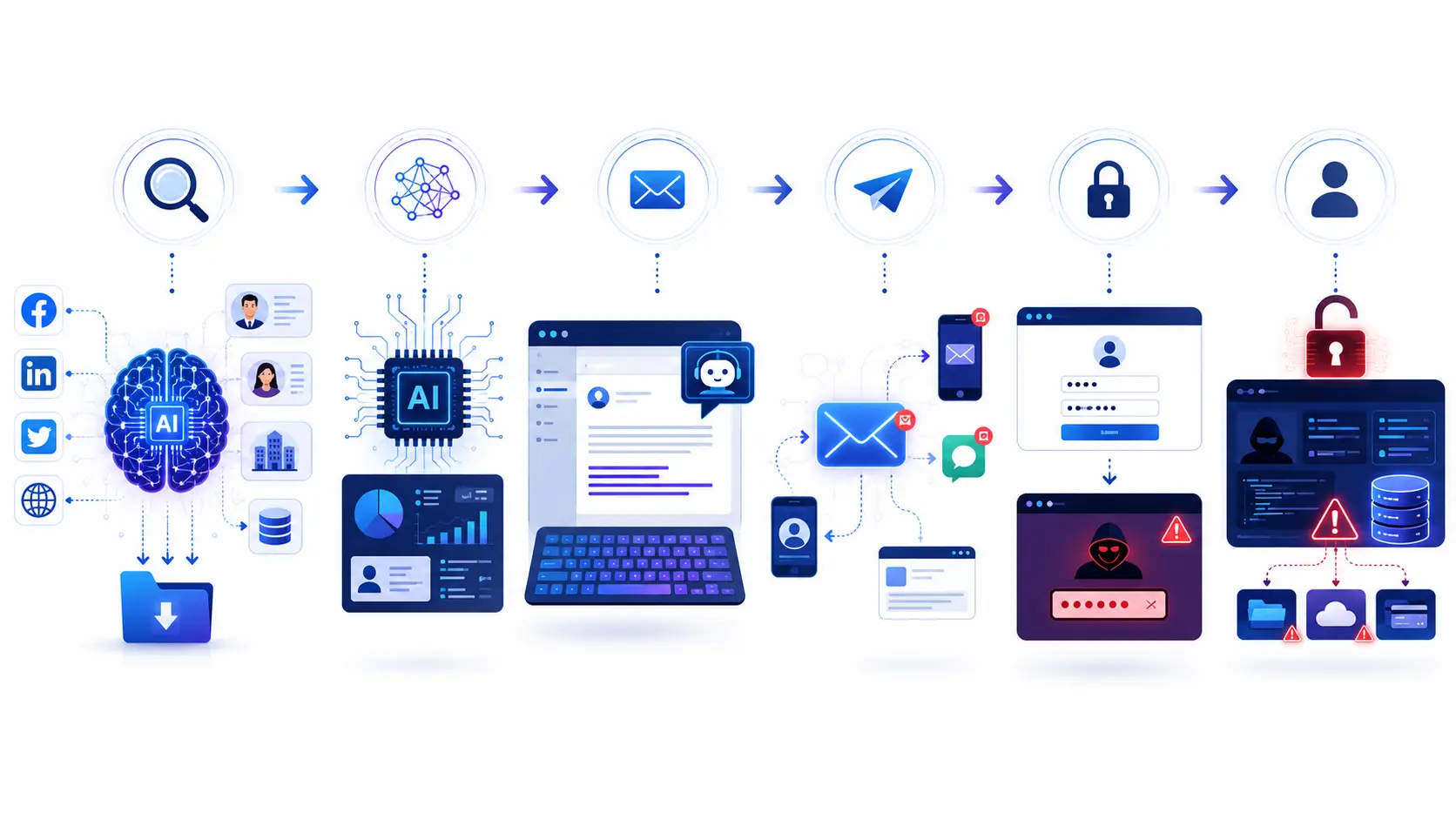
Artificial Intelligence has changed the way cybercriminals plan and execute attacks. Instead of spending days researching a target or manually creating phishing emails, attackers can now automate much of the process using AI-powered tools.
Modern AI systems can collect publicly available information, generate personalized messages, clone voices, create fake videos, write malicious code, and even adapt attacks based on a victim's responses. As a result, cyber attacks are becoming more scalable, targeted, and difficult to detect.
Below are some of the most common ways hackers are using Artificial Intelligence in 2026.
1. AI-Powered Phishing Attacks
Phishing has existed for decades, but Artificial Intelligence has dramatically increased its effectiveness. Traditional phishing emails often contained spelling mistakes, awkward grammar, and generic greetings, making them relatively easy to identify.
Today's AI-powered phishing campaigns are far more sophisticated. Large language models can generate natural, personalized emails that closely match a company's writing style or imitate conversations between colleagues. Cybercriminals can create hundreds or even thousands of convincing phishing emails within minutes.
AI also helps attackers analyze publicly available information from social media, company websites, and professional networking platforms. This allows them to include accurate names, job titles, projects, and business relationships, making fraudulent messages appear legitimate.
Many phishing campaigns now extend beyond email. AI-generated SMS messages, fake customer support chats, and malicious social media messages are increasingly being used to steal login credentials, banking information, and confidential business data.
2. Deepfake Scams and Voice Cloning
One of the fastest-growing cybersecurity threats is the use of AI-generated deepfakes. Modern AI models can recreate a person's voice, facial expressions, and speaking style using only a small amount of publicly available audio or video.
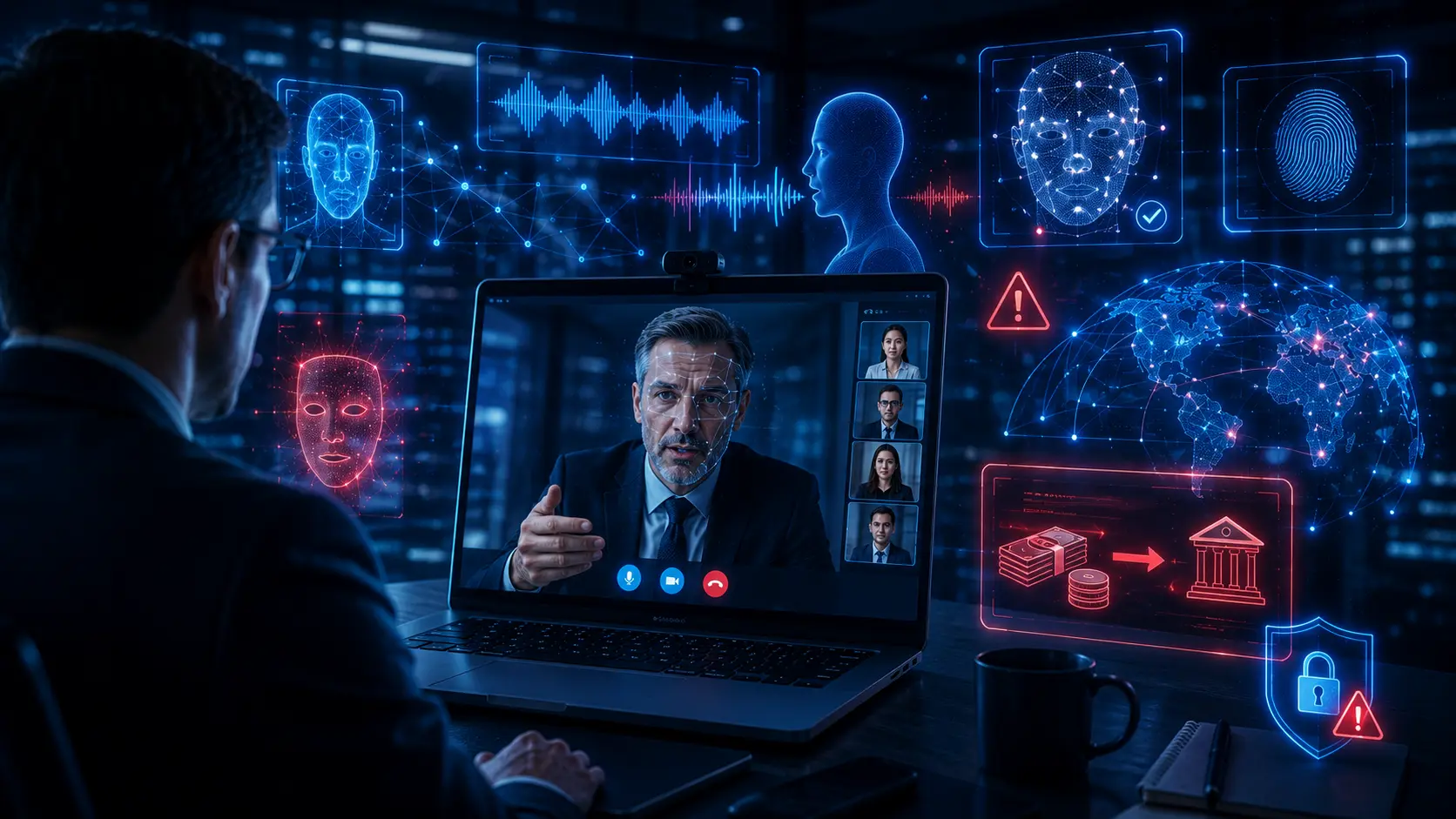
Cybercriminals use these technologies to impersonate executives, family members, financial managers, or customer support representatives. A victim may receive what appears to be a legitimate phone call or video meeting requesting an urgent payment or the disclosure of sensitive information.
Because these AI-generated voices and videos closely resemble real people, victims often trust them without questioning their authenticity. This makes deepfake scams one of the most convincing forms of AI-powered cyber attacks today.
Real-World Example: The Arup Deepfake Scam
A well-known example demonstrates how convincing these attacks have become. In early 2024, a finance employee at engineering firm Arup participated in what appeared to be a routine video meeting with senior executives. Every participant on the call—including the company's CFO—was an AI-generated deepfake created from publicly available video footage.
Believing the meeting was genuine, the employee approved multiple financial transfers totaling approximately $25 million before discovering that the executives had never actually joined the meeting.
This incident highlights an important cybersecurity lesson: seeing a familiar face or hearing a familiar voice is no longer enough to verify someone's identity. Organizations should always confirm high-risk requests through a separate communication channel before transferring money or sharing confidential information.
Cybersecurity TipNever approve urgent financial transactions, password resets, or confidential requests based solely on an email, phone call, or video meeting. Always verify sensitive requests using an independent communication channel.
AI-Generated Malware Is Becoming More Sophisticated
Artificial Intelligence is also changing how malicious software is developed. While AI does not automatically create fully functional malware on its own, it can significantly speed up parts of the development process by helping attackers write code, modify existing malware, identify vulnerabilities, and bypass basic security checks.
Cybercriminals can use AI coding assistants to generate scripts, automate repetitive programming tasks, and quickly create multiple variations of malicious software. This makes it easier to launch large-scale attacks while reducing the technical expertise traditionally required.
Security researchers have also observed attackers using AI to improve ransomware campaigns, automate exploit development, and generate malicious code that changes its behaviour to avoid simple detection methods.
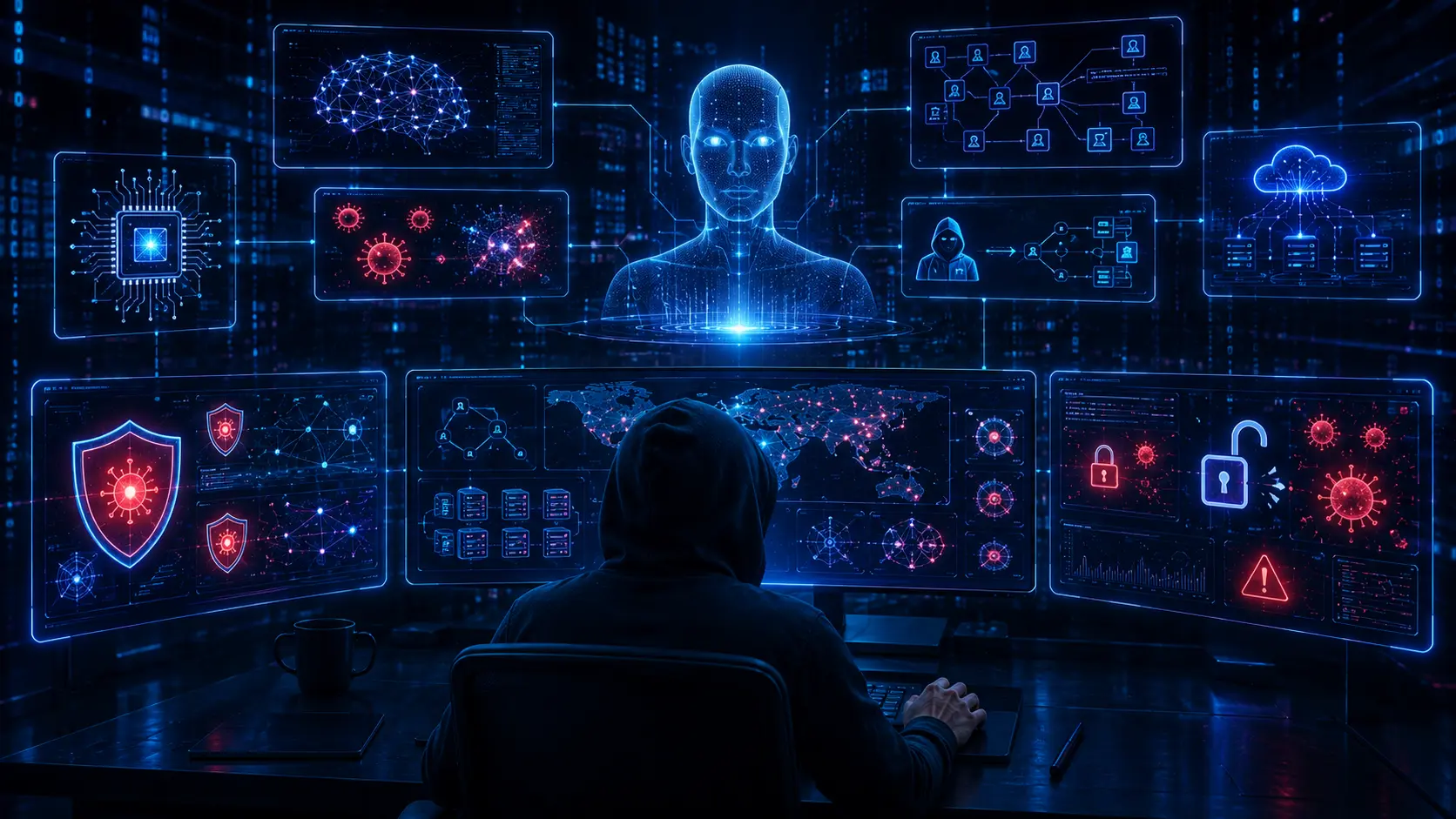
Important NoteArtificial Intelligence does not replace human attackers. Instead, it helps them work faster, automate repetitive tasks, and launch more sophisticated cyber attacks.
AI-Powered Social Engineering
Social engineering has always relied on manipulating human emotions such as trust, curiosity, urgency, and fear. Artificial Intelligence has made these attacks significantly more convincing by enabling cybercriminals to create highly personalized conversations at scale.
AI systems can analyse information from social media profiles, company websites, online resumes, and public databases to build detailed profiles of potential victims. Attackers then use this information to craft messages that appear authentic and relevant.
Instead of sending one generic phishing email to thousands of people, criminals can now generate unique messages tailored to each individual. This dramatically increases the likelihood that victims will click malicious links or reveal sensitive information.
Businesses are particularly vulnerable because attackers can imitate executives, HR departments, IT support teams, financial institutions, or trusted suppliers using realistic language generated by AI.
Can AI Hack Systems on Its Own?
One of the biggest misconceptions about Artificial Intelligence is that it can independently hack any computer system without human involvement. In reality, today's AI systems still require human guidance and oversight.
However, AI can automate many stages of a cyber attack. It can scan public infrastructure for vulnerabilities, analyse exposed services, generate phishing content, summarise technical documentation, assist with scripting, and recommend possible attack paths based on available information.
This allows attackers to complete reconnaissance and preparation much faster than before, enabling them to target more victims in less time.
Rather than replacing hackers, AI acts as a force multiplier that improves efficiency throughout the attack lifecycle.
Key TakeawayArtificial Intelligence is not an autonomous hacker. It is a powerful tool that helps cybercriminals automate reconnaissance, improve decision-making, and scale existing attack techniques.
How an AI-Powered Cyber Attack Works
Although every cyber attack is different, many AI-assisted attacks follow a similar sequence. Artificial Intelligence helps automate multiple stages of the process, allowing attackers to move from research to execution much more quickly than traditional methods.
| Stage | How AI Helps Attackers |
|---|---|
| Reconnaissance | Collects publicly available information about people and organisations. |
| Target Analysis | Identifies valuable employees, executives, and potential attack opportunities. |
| Content Generation | Creates realistic phishing emails, fake messages, or social engineering scripts. |
| Impersonation | Generates deepfake voices or videos to increase credibility. |
| Attack Execution | Launches phishing campaigns or malware using automated workflows. |
| Data Theft | Attempts to steal credentials, financial information, or confidential business data. |
Traditional Cyber Attacks vs AI-Powered Cyber Attacks
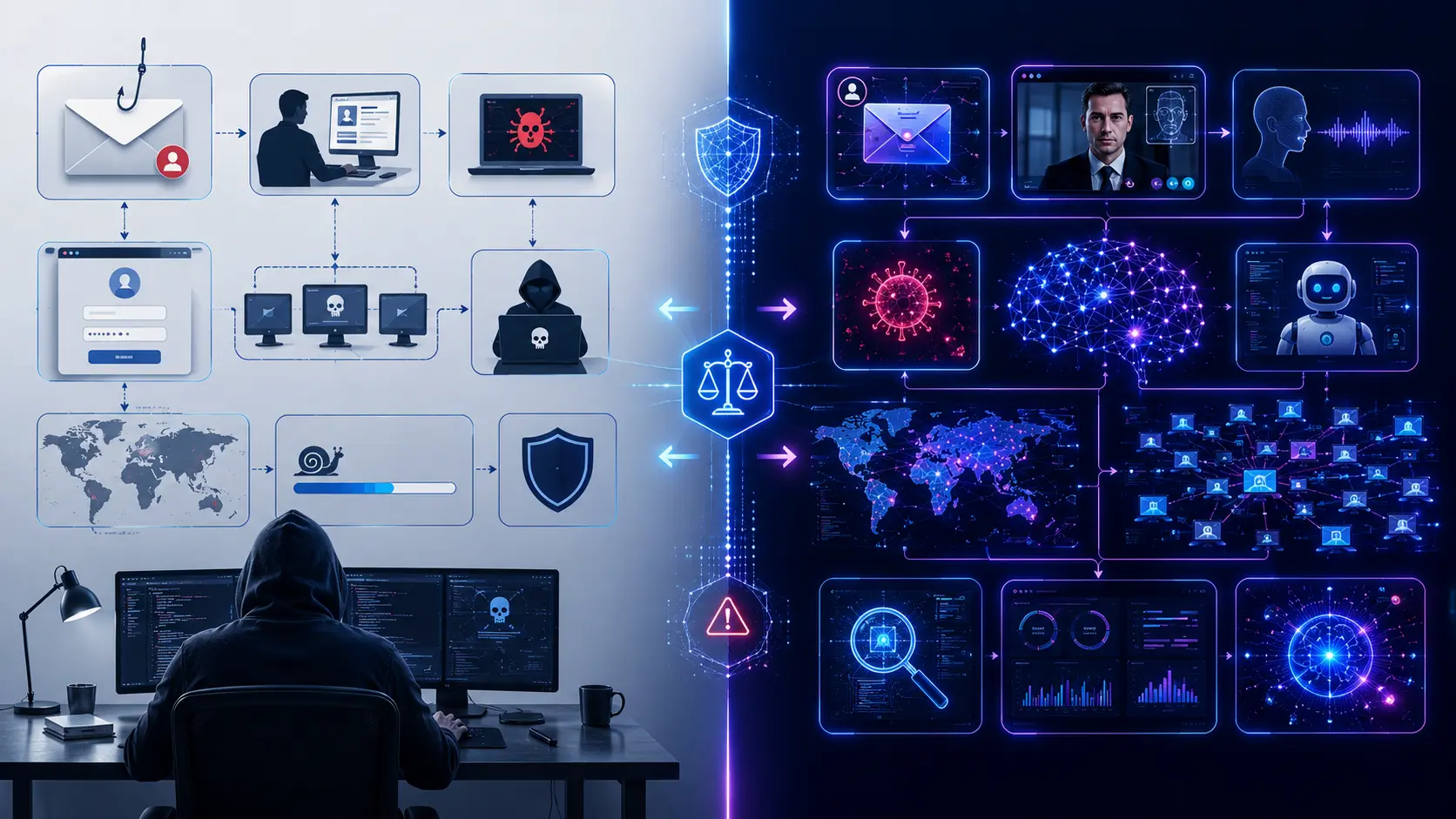
| Traditional Cyber Attacks | AI-Powered Cyber Attacks |
|---|---|
| Generic phishing emails | Highly personalised phishing campaigns |
| Manual target research | Automated intelligence gathering |
| Limited attack scale | Large-scale automated campaigns |
| Easier to identify | More convincing and difficult to detect |
| Static attack techniques | Rapidly evolving AI-assisted methods |
Why AI-Powered Cyber Attacks Are More Dangerous
Artificial Intelligence has lowered the barrier to entry for many cybercriminals while increasing the effectiveness of existing attack methods. Tasks that once required extensive technical knowledge can now be completed much faster with AI-assisted tools.
Organizations also face greater challenges because AI-generated phishing emails, deepfake content, and automated social engineering attacks are becoming increasingly realistic. Traditional awareness training alone may no longer be sufficient to stop these threats.
The most effective defence combines cybersecurity awareness, strong authentication practices, regular software updates, employee training, and modern security technologies capable of detecting AI-assisted attacks.
Key TakeawayThe greatest risk of Artificial Intelligence is not that it creates entirely new cyber threats, but that it makes existing attacks faster, cheaper, more scalable, and significantly harder to identify.
How to Protect Yourself from AI-Powered Cyber Attacks
As Artificial Intelligence continues to improve, cyber attacks will become more sophisticated. Fortunately, the same cybersecurity fundamentals that protect against traditional attacks are still highly effective against AI-assisted threats when combined with good security practices and awareness.
The key is to verify information before taking action, reduce unnecessary risks, and use modern security tools wherever possible.
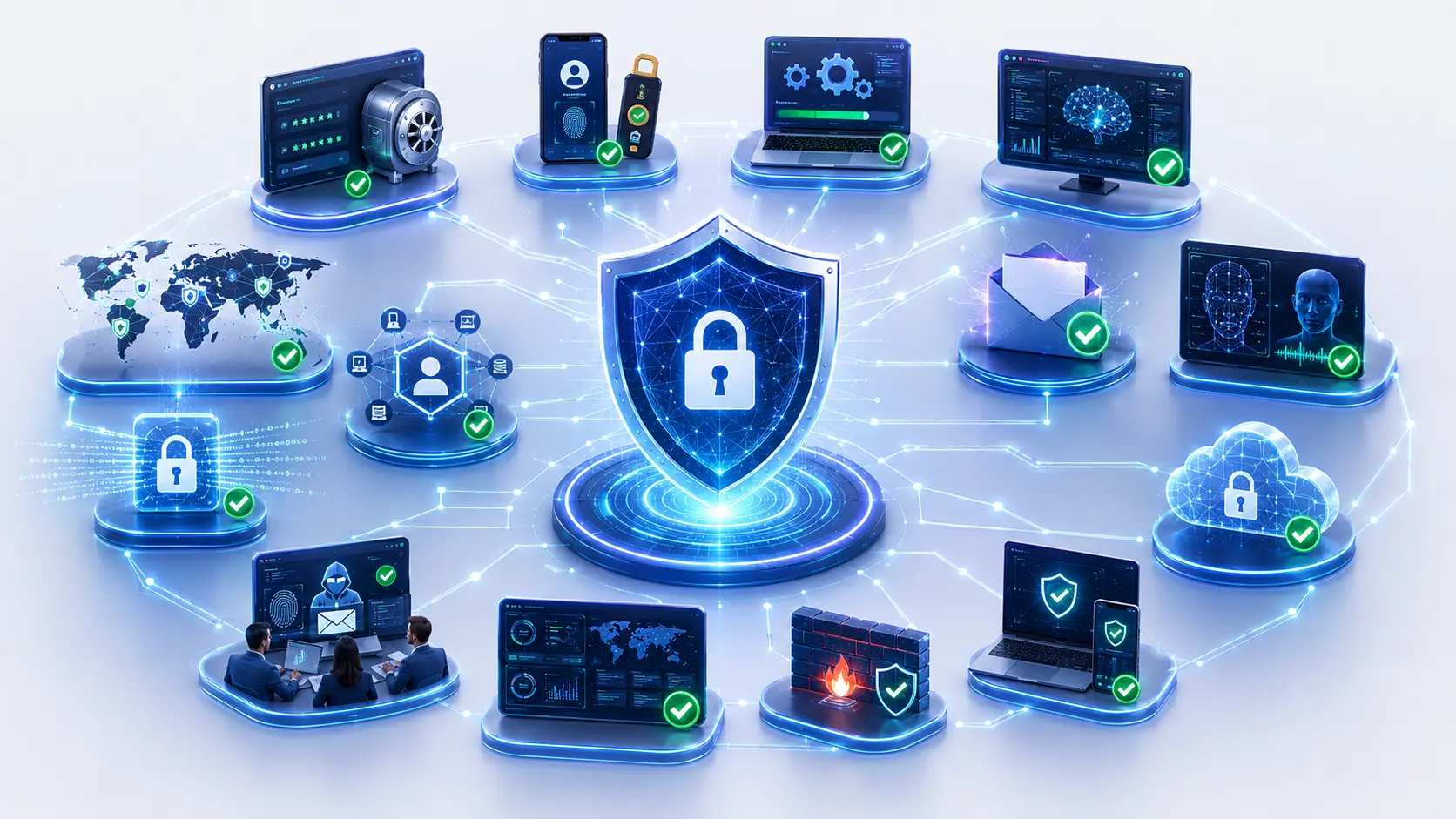
Cybersecurity Best Practices Everyone Should Follow
1. Verify Every Urgent Request
If someone asks you to transfer money, share confidential information, reset passwords, or approve financial transactions, always verify the request through an independent communication channel.
Never rely solely on an email, phone call, text message, or video meeting, even if it appears to come from someone you trust.
2. Enable Multi-Factor Authentication (MFA)
Multi-factor authentication adds an additional layer of security beyond your password. Even if attackers steal your login credentials through AI-generated phishing attacks, MFA makes it much harder for them to access your accounts.
Whenever possible, use authentication apps or hardware security keys instead of SMS-based verification.
3. Keep Software Updated
Many successful cyber attacks exploit vulnerabilities that already have security patches available. Regularly updating your operating system, browser, applications, and antivirus software reduces the risk of attackers exploiting known weaknesses.
4. Be Careful with AI-Generated Content
Not every professional-looking email, document, image, or video is genuine. Artificial Intelligence can now generate highly convincing content that closely resembles legitimate communications.
Always verify unexpected requests, especially those involving financial transactions, sensitive business information, or login credentials.
5. Train Employees Regularly
For businesses, cybersecurity awareness training is one of the most effective defences against phishing and social engineering attacks. Employees should understand how AI-generated scams work and know how to report suspicious activity immediately.
6. Monitor Accounts and Networks
Organizations should continuously monitor systems for unusual login attempts, abnormal network activity, and unauthorized access. Early detection can significantly reduce the impact of a successful cyber attack.
Cybersecurity Checklist
| Security Practice | Recommended |
|---|---|
| Use Multi-Factor Authentication | Yes |
| Verify Financial Requests Independently | Yes |
| Keep Software Updated | Yes |
| Use Strong, Unique Passwords | Yes |
| Review Suspicious Emails Carefully | Yes |
| Provide Regular Security Awareness Training | Yes |
| Trust Every AI-Generated Message | No |
InfoShalaa Expert NoteArtificial Intelligence is changing cybersecurity for both attackers and defenders. While cybercriminals are using AI to automate phishing, deepfake scams, and malware development, security professionals are also using AI to detect threats faster, analyse suspicious activity, and strengthen digital defences. The safest approach is to combine modern security technologies with informed human decision-making.
Conclusion
Artificial Intelligence is reshaping the cybersecurity landscape at an unprecedented pace. Cybercriminals are no longer relying only on manual attacks—they are using AI to automate research, generate convincing phishing campaigns, create deepfake content, and improve existing attack techniques.
However, Artificial Intelligence is not making hackers unstoppable. Strong cybersecurity practices, employee awareness, multi-factor authentication, software updates, and careful verification of sensitive requests continue to provide effective protection against most AI-assisted cyber threats.
The future of cybersecurity will depend on how quickly individuals and organizations adapt to these evolving technologies. Understanding how AI-powered cyber attacks work today is the first step toward defending against the threats of tomorrow.
Frequently Asked Questions
What are AI-powered cyber attacks?
AI-powered cyber attacks are cyber attacks that use Artificial Intelligence to automate, improve, or personalize activities such as phishing, malware development, deepfake scams, social engineering, and vulnerability research.
How are hackers using Artificial Intelligence?
Hackers use AI to generate phishing emails, clone voices, create deepfake videos, analyse publicly available information, automate reconnaissance, and assist with writing malicious code.
Can Artificial Intelligence create malware?
AI can assist with malware development by generating code, improving existing scripts, and automating parts of the development process. Human attackers still play the primary role in planning and executing cyber attacks.
What is the biggest AI cybersecurity threat in 2026?
AI-powered phishing, deepfake impersonation, and highly personalized social engineering attacks are among the fastest-growing cybersecurity threats because they are difficult to distinguish from legitimate communications.
How can I protect myself from AI-powered cyber attacks?
Use strong passwords, enable multi-factor authentication, verify unexpected requests independently, keep software updated, and remain cautious when receiving emails, phone calls, messages, or videos requesting sensitive information.
Will Artificial Intelligence replace cybersecurity professionals?
No. AI is becoming an important tool for cybersecurity teams, but human expertise remains essential for analysing threats, making strategic decisions, responding to incidents, and managing organizational security.
Continue Learning with InfoShalaa
Cybersecurity continues to evolve alongside Artificial Intelligence, and staying informed is one of the best ways to protect yourself in an increasingly digital world.
Explore more expert guides on Artificial Intelligence, Cyber Security, Data Science, Programming, and Web Development on InfoShalaa to stay updated with the latest technology trends, practical tutorials, and beginner-friendly learning resources.
Building awareness today is one of the most effective ways to stay secure tomorrow.